
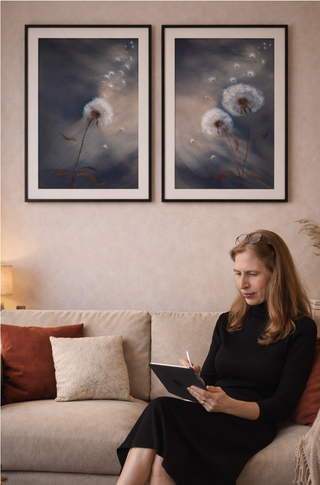
Why the tool does not define the artwork
For centuries, artists have adapted to new materials. Oil paint once offered possibilities that tempera could not. Photography changed the way artists looked at composition and observation. Acrylic paint introduced another way of working. Today, a tablet and stylus can sit alongside brushes, canvas and paint.
For Dizzywalker, painting on an iPad is not a departure from traditional painting. It is another way of practising it.
Dizzywalker learned to approach art through drawing, observation, colour, composition and the physical process of painting. That background remains present when the surface changes from canvas to screen. A digital brush may respond differently from a physical one, but the decisions behind every mark remain remarkably familiar: where to place a line, when to soften an edge, how to build depth, which colour to remove, and when the work is finished.
The iPad is simply the surface on which those decisions are made.
Painting rather than producing an image
One of the misconceptions surrounding digital art is that the technology somehow creates the artwork for the artist. For someone accustomed to painting traditionally, the reality is very different.
Dizzywalker works on the iPad much as she would approach a painting. Forms are drawn and developed. Colours are mixed visually. Marks are built gradually. Sections are painted over, erased, redrawn and reconsidered. Some areas develop quickly while others may require repeated changes before they feel right.
The ability to undo a mark or work in layers changes part of the process, but it does not remove the need for artistic judgement. The artist still has to decide what should remain and what should disappear.
A sophisticated tool cannot decide whether a composition feels balanced. It cannot understand why a particular red needs to dominate an image, why a figure should remain partly unresolved, or why an apparently unfinished mark may be essential to the whole painting.
Those decisions belong to the artist.
The prejudice around digital art
For artists trained in more traditional methods, digital painting can initially be difficult to accept as painting at all. There is often an assumption that working digitally must be easier, faster or somehow less authentic.
Much of that reaction comes from confusing the tool with the creative process.
A brush does not make someone a painter. Owning expensive oil paints does not produce a successful painting. In exactly the same way, owning an iPad and a stylus does not create digital art.
The knowledge carried from traditional painting remains important: drawing, proportion, colour relationships, light, negative space, rhythm and composition. The technology may offer different possibilities, but it does not replace those foundations.
This is particularly interesting for artists who have worked with physical materials for many years. Their digital work often carries traces of the way they already paint. Brush pressure, layering, transparency, rough edges and visible marks can all be recreated digitally, not by pressing a button, but through the artist's choices.
Dizzywalker's digital paintings deliberately retain this painterly quality. They are not intended to imitate photography or look mechanically perfect. Brush marks remain visible. Surfaces can be uneven. Colour is layered. The aim is to retain the character of a painting while working in a different medium.
Artists have always adopted new tools
David Hockney offers a well-known example. After decades of painting and drawing using traditional materials, he began creating drawings on digital devices and later produced extensive work using the iPad. His use of technology did not erase his previous practice. It became another part of it.
That distinction matters.
Digital painting does not have to represent a rejection of traditional art. For many artists it is an extension of skills developed through years of looking, drawing and painting.
The iPad also introduces its own creative possibilities. An artist can work almost anywhere. Colours can be explored without preparing a palette. A composition can develop through many versions without requiring several canvases. The process can become more immediate and experimental.
None of this makes the artistic decisions automatic.
What matters is the work
Perhaps the most useful question is not Was this painted with oil, acrylic or pixels?
It is simply: Does the artwork work?
When we stand in front of a painting, we respond to its colour, atmosphere, subject, composition and emotional presence. The quality of the work ultimately depends on what the artist has made from the tools available.
For Dizzywalker, moving between physical paint and digital painting is therefore less dramatic than it might appear. The materials change. The thinking does not.
The hand still makes choices. The eye still judges them. The artist still decides when an image has become a finished artwork.
From paint to pixels, the tool changes. The act of painting remains.