
Turning an artistic practice into a professional activity does not necessarily mean giving up your main job. In Belgium, becoming self-employed in a secondary occupation, indépendant complémentaire or zelfstandige in bijberoep, can be a practical way to begin selling your work while keeping the security of your main professional activity.
For artists, this can cover much more than selling paintings. It may include commissions, prints, photography, illustration, workshops, creative services, digital work, exhibitions or other paid artistic activities.
What does “secondary occupation” mean?
You are still genuinely self-employed. The word secondary simply refers to the fact that another professional activity provides your main social status. For an employee, this will normally mean working at least half-time in the main job.
The administrative formalities are essentially the same as for someone who is self-employed as their main occupation. You need to register correctly and join a social insurance fund before starting your activity. (FPS Economy)
This is an important distinction. Selling work regularly is not simply a hobby because the amounts involved are small.
Start with the practical foundations
The creative part may be what motivates you, but setting up a small professional activity also means putting a few basic structures in place.
You will normally need to:
- register your activity through an accredited enterprise counter and obtain an enterprise number;
- join a social insurance fund;
- determine whether you need to activate your VAT number and which VAT rules apply to what you sell;
- keep records of your income, invoices, purchases and professional expenses;
- separate your professional activity from your personal finances as clearly as possible.
Social contributions for self-employed people are linked to professional income. Contributions are initially provisional and may later be adjusted when the actual income becomes known. (FPS Economy)
For artists, VAT deserves particular attention because selling an original artwork, organising a workshop and providing a creative service are not necessarily treated in exactly the same way.
Think like both an artist and a small business
You do not need an elaborate business plan before selling your first work, but you do need to understand what it costs to produce it.
A €200 sale is not automatically €200 of earnings. Materials, printing, framing, platform commissions, packaging, exhibition fees, payment charges, transport, VAT and taxes can all affect what remains.
Set prices with these costs in mind and keep the supporting documents for legitimate professional expenses.
It also helps to decide what you actually want the activity to become. You might simply want your art to pay for itself. You might want a modest additional income. Or the secondary activity may eventually become something larger.
All three are valid. What matters is that you understand the structure you are creating.
Start small, but start properly
One of the advantages of a secondary activity is that it allows you to learn gradually. You can test where your work sells, discover which administrative tasks really matter and build confidence without expecting your artistic practice to support you immediately.
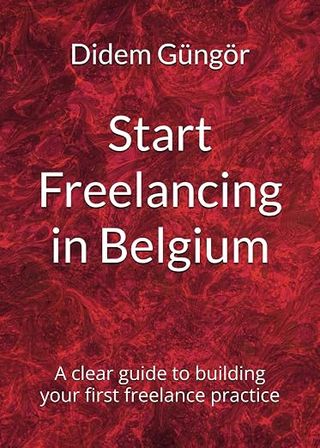
That was also one of the reasons Didem Gungor wanted to put the process into a practical guide.
If you are considering becoming self-employed in Belgium and would like a straightforward starting point, this book takes you through the experience in an accessible way, without assuming that you already understand Belgian business administration.
Find the book on Amazon: https://amzn.eu/d/06NOahR1
The objective is not to turn artists into accountants. It is to understand enough of the business side to give your creative work a solid foundation.